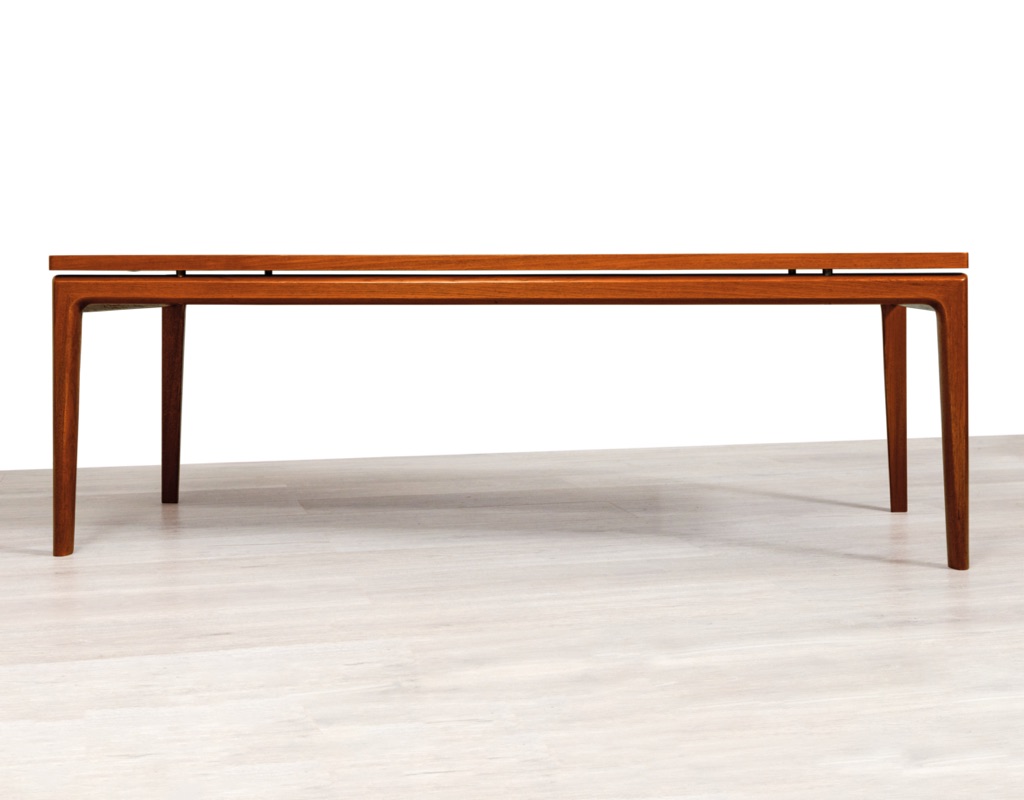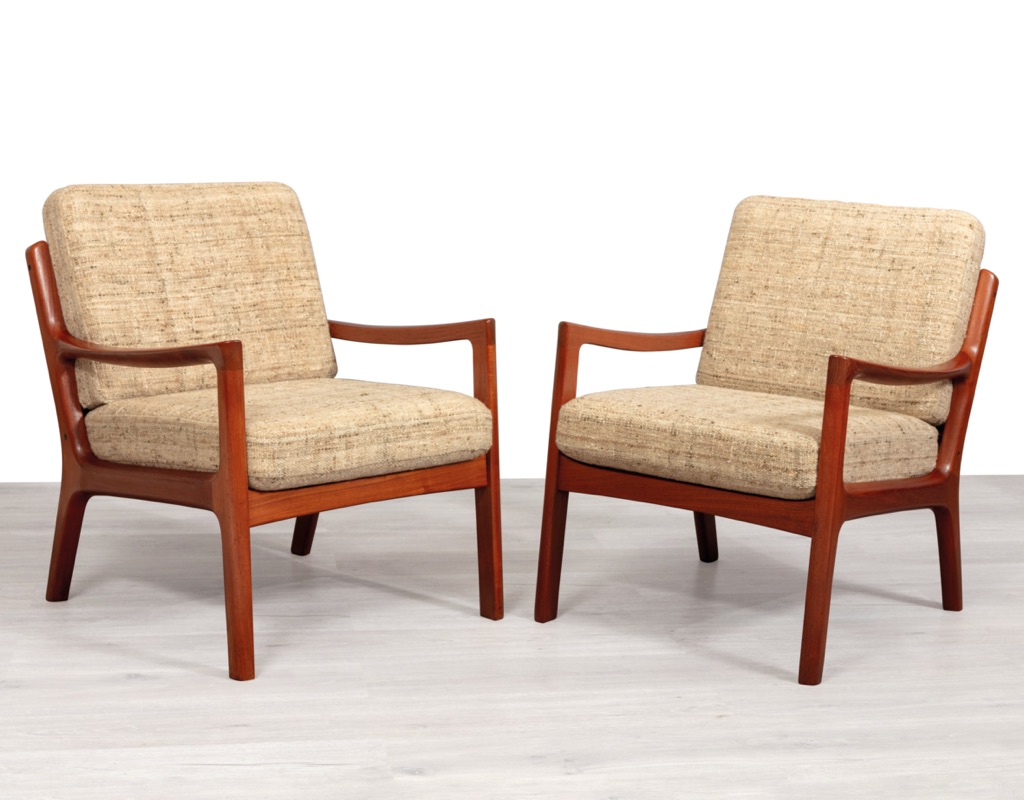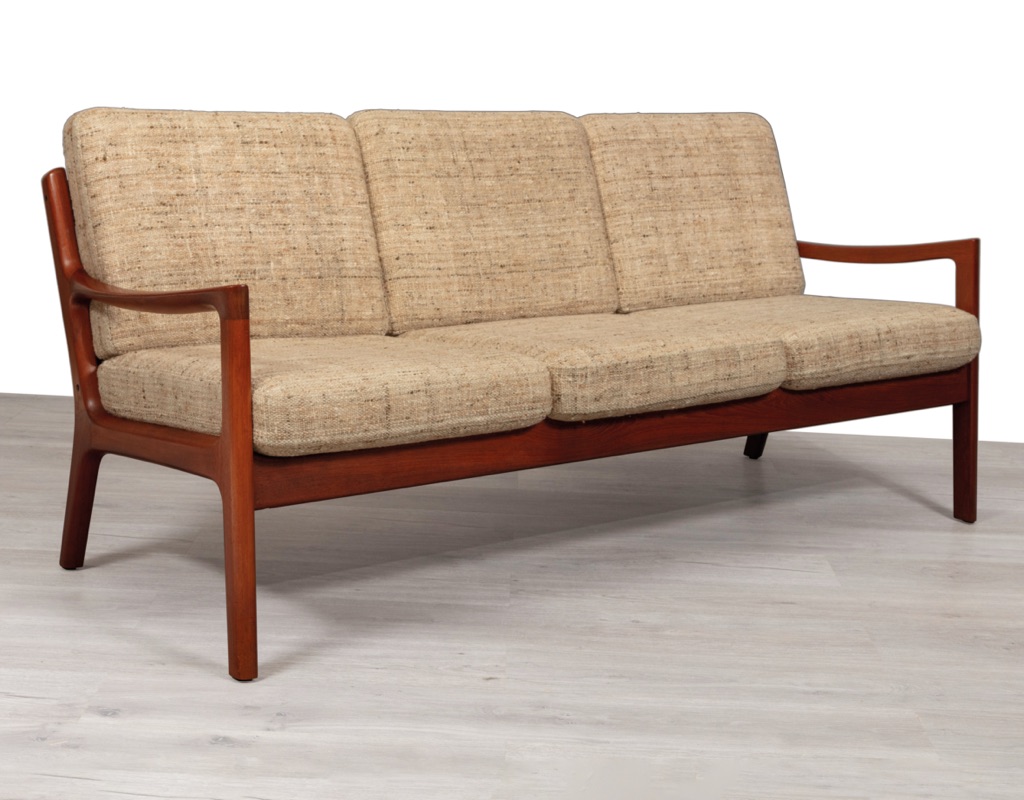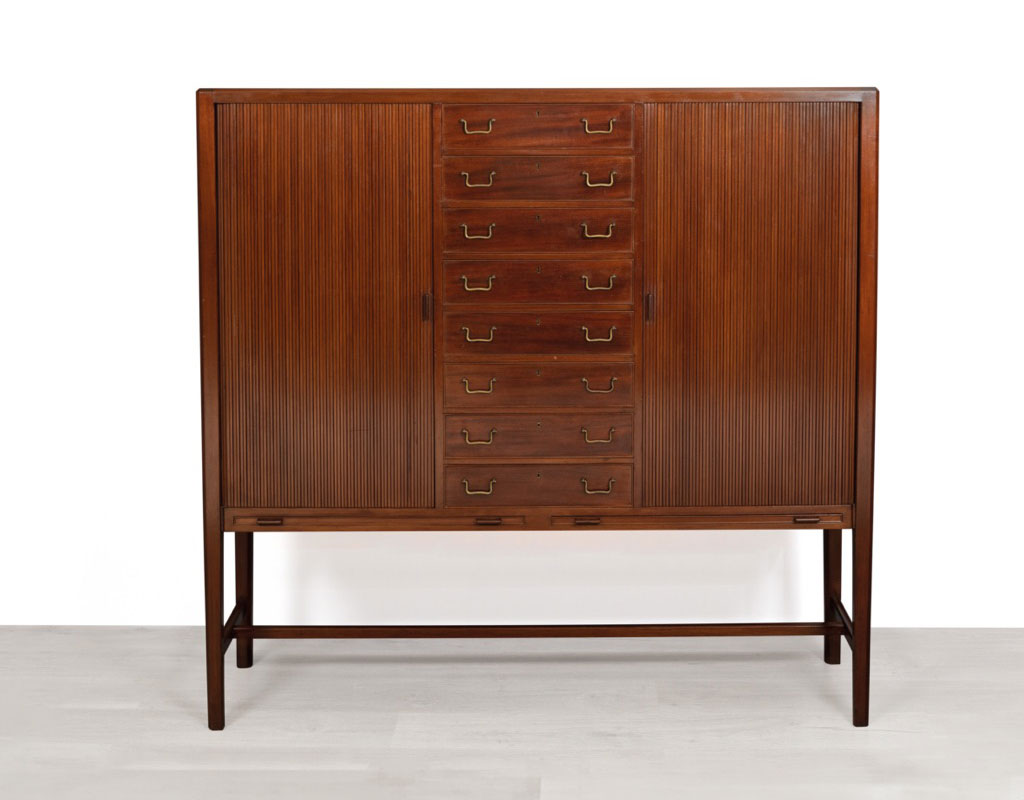
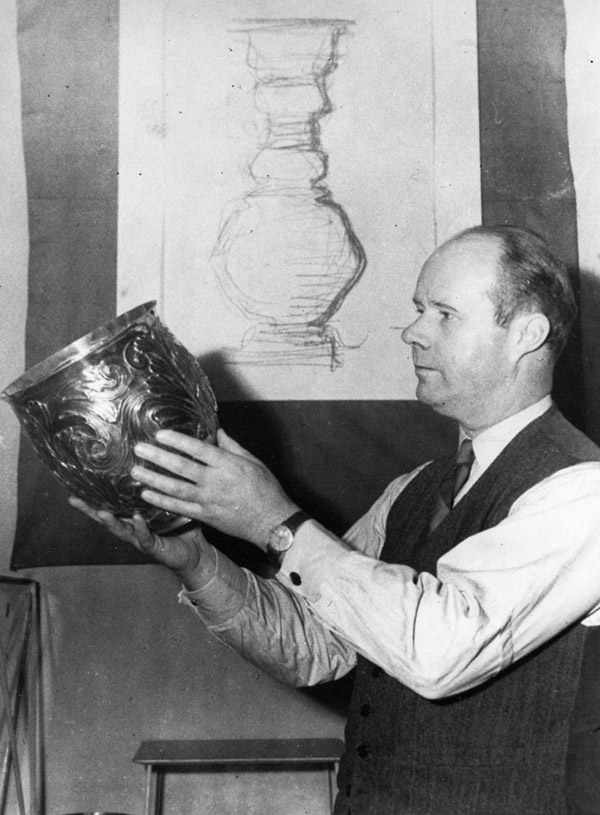
Ole Wanscher (1903–1985) was a pivotal figure in Danish modern design, renowned for his refined, timeless furniture that seamlessly blended classical influences with modernist principles. Educated under the esteemed Kaare Klint at the Royal Danish Academy of Fine Arts, Wanscher embraced a philosophy that treated furniture design as an extension of architecture, emphasizing proportion, structure, and functionality.
In 1929, Wanscher established his own design studio, marking the beginning of a prolific career. His collaboration with master cabinetmaker A.J. Iversen yielded some of his most iconic pieces, including the Egyptian Stool and the Colonial Chair. These works are celebrated for their elegant simplicity and meticulous craftsmanship, drawing inspiration from diverse sources such as ancient Egyptian, Greek, and Chinese furniture, as well as 18th-century English design.Carl Hansen & Søn.
Wanscher’s designs are characterized by their delicate lines, understated elegance, and a deep respect for natural materials. He often employed high-quality woods and traditional construction techniques, ensuring both aesthetic appeal and durability. His commitment to functionality and form resulted in pieces that are not only visually pleasing but also comfortable and practical.
Beyond his design work, Wanscher was a dedicated educator and author. Following Klint’s death in 1955, he succeeded his mentor as a professor at the Royal Danish Academy, a position he held until 1973. During this time, he authored several influential texts on furniture history and aesthetics, including “The History of the Art of Furniture” and “Five Thousand Years of Furniture,” contributing significantly to the academic discourse on design.
Today, Ole Wanscher’s furniture remains widely desired by collectors and design enthusiasts worldwide. His pieces are revered for their timeless quality, embodying the essence of Scandinavian design—functional, minimalist, and deeply connected to craftsmanship.